Posts

Showing posts with the label CSA

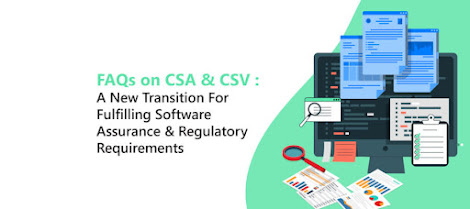
"Demystifying CSA Validation: Ensuring Software Reliability and Compliance"

Image
  CSA Validation typically refers to the validation of Computer Software Applications within a regulated environment, such as pharmaceuticals, healthcare, or other industries where compliance with standards and regulations is crucial. CSA stands for Computer Software Assurance. This validation process ensures that computer applications, software, or systems used for critical functions are reliable, accurate, and compliant with regulatory requirements.   In today's tech-driven world, Computer System Applications are the backbone of various industries, from pharmaceuticals to healthcare. Ensuring the reliability and compliance of these systems is paramount. Join us on a journey to demystify CSA Validation —a process that guarantees software accuracy and adherence to stringent regulations.  In this blog post, we'll explore the essentials of CSA Validation, from defining its significance to uncovering best practices. Dive into the intricacies of ensuring that your soft...
FDA Data Integrity | Strategies for Optimized Data Lifecycle Management

Image
Data Integrity is a critical aspect for ensuring accuracy, reliability, and consistency of data within computer software systems. ALCOA principles originally developed by FDA which stand for Attributable, Legible, Contemporaneously recorded, Original or a true copy, and Accurate serves as a guide for maintaining and ensuring data integrity in regulated environments. Implementing and adopting ALCOA principles help mitigate risks associated with data manipulation and unauthorized access. Organizations in addition can foster a culture of data integrity, bolster regulatory compliance, and promote trust in data-driven operations. Citations: FDA Data Integrity | Strategies for Optimized Data Lifecycle Management (complianceg.com)  

CSA (vs) CSV Validation Process | Compliance Group Inc

Image
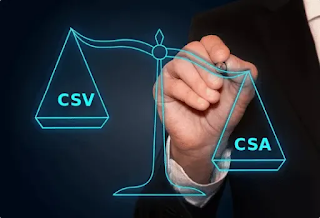
  Both   CSA (Computer Software Assurance)   and   CSV (Computer System Validation)   are processes used in the pharmaceutical and regulated industries to ensure that computer systems and software used for critical functions comply with regulatory requirements and are fit for their intended use. While CSA focuses on a broader scope of assurance activities, CSV specifically pertains to the validation of computer systems. Here are the key steps involved in the validation process for both CSA and CSV: CSV (Computer System Validation) Process Steps: 1. Planning and Risk Assessment:   - Define the scope of the validation effort.   - Identify potential risks associated with the computer system.   - Determine the level of validation required based on risk assessment. 2. User Requirements Specification (URS):   - Document user needs and functional requirements for the system.   - Include detailed descriptions of system b...

FDA CSA Regulatory Requirements - All you Need To Know

Image
  fda-csa-regulatory-requirements Interesting article from Compliance Group Inc related to Computer Software Assurance (CSA) and Computer Software Validation (CSV) in the context of FDA regulatory requirements. CSA and CSV are critical aspects of ensuring the safety, reliability, and effectiveness of software used in medical devices. While there are no specific FDA regulations solely dedicated to CSA and CSV, compliance with Quality System Regulation (QSR) under 21 CFR Part 820 is essential for medical device manufacturers. This article addresses key questions on implementation, tools, consequences of non-compliance, outsourcing, and additional resources for CSA and CSV, providing valuable insights for manufacturers navigating software assurance and validation in the medical device industry. Citations: FDA CSA Regulatory Requirements | 21 CFR Part 11 | Compliance Group Inc 21 CFR Part 820 vs ISO 13485 | Compliance Group Inc CSA (vs) CSV: Understanding the Key Steps of Validation ...

Quality Assurance -What are the benefits of Software Quality Assurance ?

Image
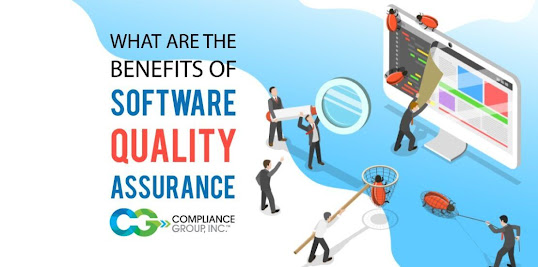
Amid 2020, quality assurance leaders in the pharmaceutical, medical device, and other FDA-regulated industries highlighted compliance and production as part of their quality goals. Maintaining consistent compliance has remained part of the top three challenges the industry has been experiencing. How can firms in the life science industry overcome these challenges?   Software Quality Assurance   is the key industry trend and has many benefits in preventing mistakes to ensure compliance and patient safety. To summarize, software validation has been a requirement by the FDA since 1997. Software  Quality Assurance  (SQA )  is the set of activities that ensure processes, procedures as well as standards are suitable for the project and implemented correctly Furthermore, pharmaceutical and medical device companies may be one of the same. Today, many companies in the industry are still being audited and fined at high costs for similar but different compliant regulated i...

What Makes for a Great Validation Lead

  If you need a warm body for a  Validation  project, call the other guy, but if you need proficient, trained, critical-thinking resources, contact us.    Compliance Group carefully vets our resources. New employees are placed with veteran employees to shadow and learn from them. We routinely train our resources on Computer Software Assurance (CSA), Data Integrity, MS Word skills, trends in  Validation,  and regulatory enforcement activities.   Read More .